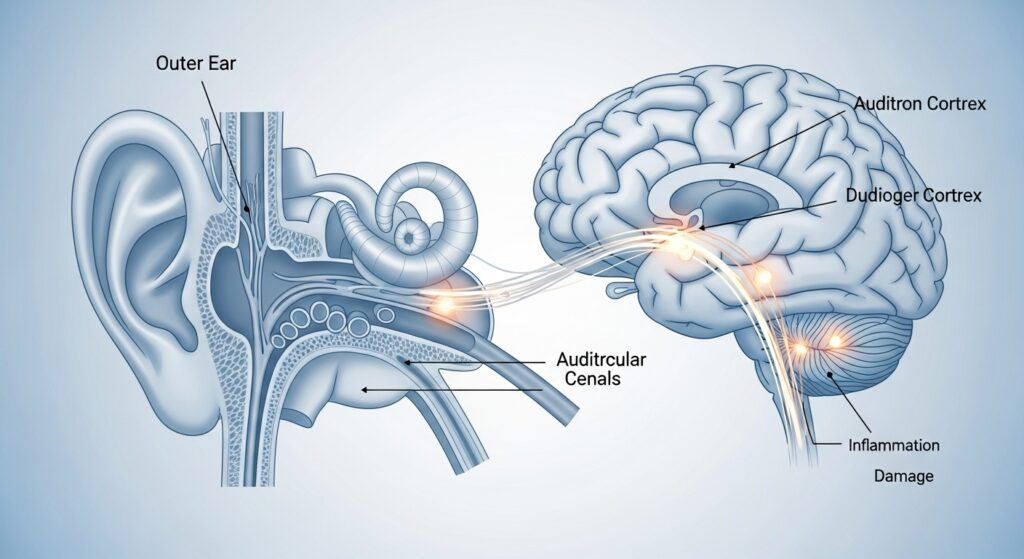
Tinnitus and nerve damage are interconnected in ways most people don’t realize. If you’re experiencing persistent ringing, buzzing, or hissing sounds in your ears, understanding the neurological connection behind these symptoms is the first step toward finding real relief.
Approximately 50 million Americans live with tinnitus, and emerging research suggests that up to 60% of cases involve some form of neural pathway disruption rather than just inner ear damage. According to research published by the National Institutes of Health, this revelation has transformed how medical professionals approach tinnitus treatment.
The constant phantom sounds can feel overwhelming—disrupting sleep, concentration, and overall quality of life. You’re not imagining it, and you’re certainly not alone. The good news? Recent scientific discoveries about the brain-ear neural network are opening new doors for effective management strategies.
If you’re looking for evidence-based solutions that address the root neurological causes, our comprehensive analysis of Quietum Plus ingredients explores how targeted supplementation can support damaged neural pathways and potentially reduce tinnitus symptoms.
The Science Behind Tinnitus and Nerve Damage
How Neural Pathways Create Phantom Sounds
Your auditory system is far more complex than most people realize. Sound doesn’t just travel from your ear to your brain—it journeys through an intricate network of nerve fibers, synapses, and processing centers.
Here’s what happens when this system becomes damaged:
The Normal Process:
- Sound waves enter the ear canal
- Tiny hair cells in the cochlea convert vibrations into electrical signals
- The auditory nerve transmits these signals to the brainstem
- Multiple brain regions process and interpret the information
When Nerve Damage Occurs:
- Hair cells die or become damaged (often irreversibly)
- The auditory nerve receives incomplete signals
- The brain attempts to “fill in” missing information
- Hyperactivity develops in auditory processing centers
- You perceive sound that isn’t actually there—tinnitus
A 2023 study published in Nature Neuroscience confirmed that tinnitus often results from maladaptive neuroplasticity. Essentially, your brain rewires itself in response to reduced auditory input, creating the perception of sound.
The Inflammation-Nerve Damage Link
Chronic inflammation plays a significant role in nerve deterioration. When inflammatory molecules accumulate around neural tissues, they can:
- Damage the myelin sheath protecting nerve fibers
- Reduce neurotransmitter production and reception
- Impair blood flow to delicate auditory structures
- Accelerate age-related neural degeneration
Research from Harvard Medical School indicates that neuroinflammation may be the missing link explaining why some people develop chronic tinnitus while others with similar ear damage do not.
Risk Factors for Auditory Nerve Damage
Understanding your risk helps you take preventive action:
- Age: Neural degeneration accelerates after age 50
- Noise Exposure: Concerts, machinery, or headphones at high volume
- Medications: Certain antibiotics, chemotherapy drugs, and high-dose aspirin
- Circulatory Issues: Reduced blood flow starves nerves of oxygen
- Chronic Stress: Elevates cortisol, which damages neural tissue over time
- Nutritional Deficiencies: B vitamins, magnesium, and zinc are crucial for nerve health
7 Practical Methods to Manage Tinnitus and Nerve Damage
1. Sound Therapy and Neural Retraining
Your brain can be retrained to reduce tinnitus perception. Sound therapy works by:
- Playing white noise or nature sounds to mask tinnitus
- Gradually teaching your brain to filter out phantom sounds
- Reducing the contrast between silence and tinnitus
Apps like myNoise or specialized devices can provide customizable soundscapes tailored to your specific tinnitus frequency.
2. Anti-Inflammatory Nutrition 🥗
What you eat directly impacts neural inflammation. Focus on:
- Omega-3 fatty acids: Wild salmon, sardines, flaxseeds, walnuts
- Leafy greens: Spinach, kale, Swiss chard (rich in magnesium)
- Berries: Blueberries, strawberries (powerful antioxidants)
- Turmeric: Contains curcumin, a potent anti-inflammatory compound
- Dark chocolate: 70%+ cacao provides flavonoids that support circulation
Avoid inflammatory triggers like excessive sugar, processed foods, and trans fats.
3. Stress Management Techniques
Stress amplifies tinnitus perception and accelerates nerve damage. Effective strategies include:
- Meditation: 10-15 minutes daily reduces cortisol by up to 28%
- Deep breathing: Activates the parasympathetic nervous system
- Progressive muscle relaxation: Reduces physical tension that worsens symptoms
- Yoga: Combines movement, breathing, and mindfulness
Studies show that mindfulness-based stress reduction can decrease tinnitus severity by 40% within eight weeks.
4. Protect Your Hearing 🎧
Prevention is always easier than reversal:
- Use ear protection in loud environments (concerts, construction sites)
- Follow the 60/60 rule for headphones: 60% volume for maximum 60 minutes
- Take listening breaks every hour
- Avoid inserting cotton swabs deep into ear canals
Even moderate noise exposure can cause cumulative damage over years.
5. Optimize Blood Circulation
Healthy blood flow delivers oxygen and nutrients essential for nerve repair:
- Exercise regularly: 30 minutes of moderate activity 5x weekly
- Stay hydrated: Dehydration thickens blood and reduces circulation
- Limit caffeine and alcohol: Both can restrict blood vessels
- Elevate your head while sleeping: Improves circulation to the inner ear
For additional insights on maintaining overall wellness, explore our Beauty & Skin Health category for holistic health approaches.
6. Address Underlying Health Conditions
Tinnitus and nerve damage often signal broader health issues. According to the American Tinnitus Association, several conditions can contribute to or worsen symptoms:
- High blood pressure: Can damage delicate blood vessels in the ear
- Diabetes: Nerve damage (neuropathy) frequently affects hearing
- Temporomandibular joint (TMJ) disorders: Jaw misalignment can affect auditory nerves
- Thyroid dysfunction: Impacts metabolism and nerve function
Work with your healthcare provider to identify and treat these conditions.
7. Strategic Supplementation Support
While lifestyle changes form the foundation, targeted supplementation can address nutritional gaps that conventional diet may miss. Key nutrients for nerve health include:
- B-complex vitamins: Essential for myelin sheath production
- Magnesium: Protects against noise-induced damage
- Zinc: Crucial for neurotransmitter function
- Antioxidants: Combat oxidative stress in neural tissues
The Role of Specialized Supplementation in Nerve Repair
Why Standard Multivitamins Often Fall Short
Generic supplements typically provide inadequate doses of the specific compounds needed for auditory nerve support. Tinnitus and nerve damage require targeted botanical extracts and bioactive compounds that work synergistically.
Evidence-Based Ingredients for Neural Health
Research has identified several plant-based compounds with neuroprotective properties:
Mucuna Pruriens (L-DOPA Source): This tropical legume provides L-DOPA, a dopamine precursor that supports neural pathway repair. Studies suggest it may help restore damaged connections between the ear and brain’s auditory processing centers.
Ashwagandha Extract: This adaptogenic herb reduces stress-induced cortisol while protecting neurons from inflammation. Clinical trials demonstrate up to 28% reduction in stress markers—critical since stress exacerbates tinnitus perception.
Ginkgo Biloba Alternatives: While ginkgo has mixed results in studies, newer botanical combinations focusing on circulation and neuroprotection show more consistent outcomes. Compounds like epimedium and tribulus terrestris enhance blood flow to the inner ear without ginkgo’s inconsistent efficacy.
Antioxidant Complexes: Vitamins A, C, E, and minerals like zinc work together to neutralize free radicals that damage delicate auditory structures. The key is getting therapeutic doses, not the minimal amounts in basic supplements.
Bioavailability Matters
Even the best ingredients won’t help if your body can’t absorb them. That’s why advanced formulations include:
- Piperine (black pepper extract): Increases nutrient absorption by up to 2000%
- Liposomal delivery systems: Protect sensitive compounds through digestion
- Synergistic combinations: Ingredients that enhance each other’s effectiveness
Understanding which specific combinations work best requires examining the complete ingredient profile. Our detailed Quietum Plus ingredients review breaks down the science behind each component and explains why certain botanical combinations may support auditory nerve health more effectively than isolated nutrients.
When to Seek Professional Medical Evaluation
While natural approaches help many people, certain symptoms require immediate medical attention:
- Sudden hearing loss in one or both ears
- Tinnitus accompanied by dizziness or vertigo
- Pulsatile tinnitus (hearing your heartbeat)
- Tinnitus following head injury
- Symptoms that significantly worsen over days or weeks
An audiologist or ENT specialist can perform comprehensive testing to rule out serious conditions like acoustic neuroma, Meniere’s disease, or vascular abnormalities.
Conclusion: A Comprehensive Approach to Tinnitus and Nerve Damage
Managing tinnitus and nerve damage requires a multifaceted strategy. No single intervention works for everyone, but combining evidence-based approaches significantly improves your chances of meaningful relief.
Start with foundational lifestyle modifications: reduce noise exposure, manage stress, optimize nutrition, and improve circulation. These changes support overall neural health and often reduce symptom severity by 30-40% within weeks.
For those seeking additional support, targeted supplementation with neuroprotective botanicals and essential nutrients can address the underlying neurological dysfunction that conventional approaches often miss. The key is choosing formulations with therapeutic doses of scientifically-validated ingredients, not just marketing hype.
Remember that nerve repair takes time—typically 60-90 days before noticeable improvements emerge. Patience and consistency are essential.
If you’re ready to explore how specific ingredient combinations support auditory nerve health, read our complete evidence-based analysis of the most promising natural compounds. Your journey toward quieter days starts with understanding the science—and choosing solutions that actually address root causes rather than just masking symptoms.
The connection between tinnitus and nerve damage is complex, but armed with knowledge and the right tools, you can take meaningful steps toward relief. Your ears—and your brain—will thank you.