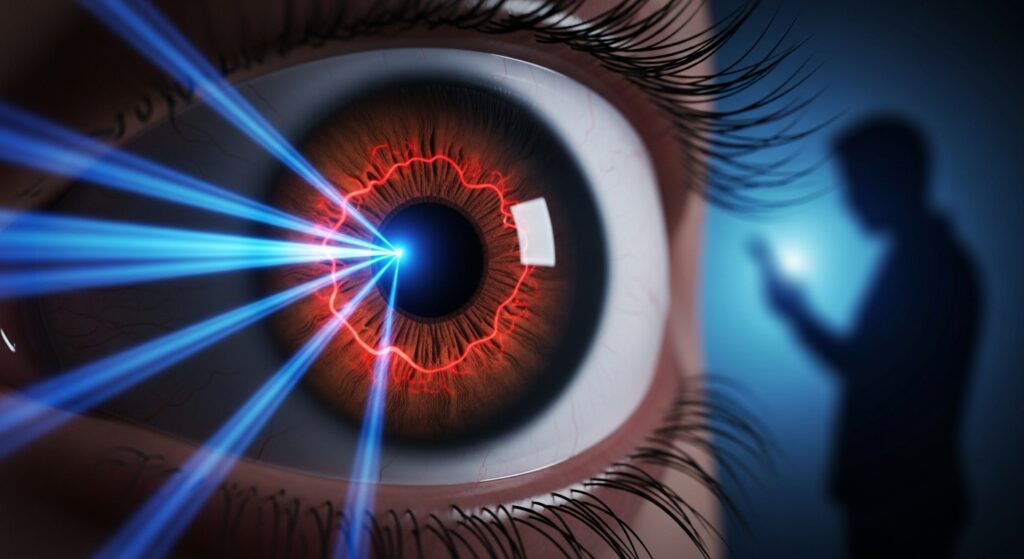
Screen Burn Syndrome is likely the hidden reason why you wake up with gritty, exhausted eyes even after a full eight hours of rest. 👁️
If you have reached the point where your vision feels “heavy” the moment you open your lids, or if you feel like you are looking through a thin veil of fog despite getting adequate sleep, you aren’t alone. In 2026, we are witnessing a global surge in what specialists now call “retinal exhaustion,” a condition that simple rest can no longer fix. 💤
As a health researcher, I have spent years investigating why modern displays are becoming more “toxic” to our ocular physiology. The blue light from our OLED screens and high-frequency devices is creating a biological debt that sleep alone cannot repay. To understand the long-term solution to this exhaustion, you should read my iGenics Reviews 2026 investigation, which explores the clinical nutrients needed to repair this specific type of damage.
The Science Behind Screen Burn Syndrome
To understand the Screen Burn Syndrome, we must move beyond the simple concept of “tired eyes” and look at the cellular level of the retina. This isn’t just a matter of dry eyes; it is a metabolic crisis within the ocular tissues. 🧬
The human eye was never evolved to stare at a concentrated, high-frequency light source for 10 to 12 hours a day. When we engage with digital displays, we experience a condition known as Digital Asthenopia. However, in 2026, the intensity of our screens has reached a level where “standard” eye strain has evolved into Screen Burn Syndrome.
At the core of this condition is a process called “Oxidative Phototoxicity.” High-energy visible (HEV) blue light penetrates deep into the back of the eye, striking the macula. This causes the mitochondria—the power plants of your eye cells—to overwork and eventually “burn out.” This is why your eyes feel tired even after sleep; your cells are literally struggling to produce enough energy to function the next day. ⚡
Furthermore, recent studies published on PubMed indicate that prolonged screen exposure triggers a Chronic Proinflammatory Environment (CPE). This inflammation traps toxins inside the retina, creating a “leaky” blood-retina barrier. When this happens, the metabolic waste that should be flushed out during sleep remains trapped, leaving your eyes feeling “sandy” and heavy every morning. 📉
7 Practical Methods to Manage Screen Burn Syndrome
Managing Screen Burn Syndrome requires a two-pronged approach: reducing the external assault and supporting the internal defense. Here are the most effective strategies for 2026:
1. Optimize Your “Refresh Rate”
Modern screens flicker at high frequencies that the naked eye can’t see, but the optic nerve feels. Ensure your devices are set to the highest possible refresh rate (at least 120Hz) to reduce the “micro-stress” placed on your ciliary muscles. 🖥️
2. The Advanced 20-20-20-2 Rule
You probably know the 20-20-20 rule, but for Screen Burn Syndrome, we add a fourth step: every 20 minutes, look 20 feet away for 20 seconds, and blink 20 times. Digital use reduces our blink rate by 60%, leading to a breakdown of the tear film that protects the cornea. 💧
3. Use “Warm” Lighting Environments
Contrast is the enemy of the optic nerve. Never use a bright screen in a dark room. Ensure your ambient lighting is “warm” (around 2700K to 3000K) to help the pupils stay in a more relaxed state while processing digital information. 🕯️
4. Implement a “Digital Sundown”
The retina is highly sensitive to the circadian rhythm. Stop all screen use at least 90 minutes before bed. This allows the rhodopsin (visual purple) in your eyes to begin regenerating without the interference of HEV blue light. 🌙
5. Calibrate for “Dark Mode”
While controversial in the past, 2026 data from Healthline suggests that “Dark Mode” reduces the overall light output of the device, which can lower the rate of retinal oxidative stress. However, ensure the text contrast is high enough so you aren’t squinting. 🌑
6. Cold Compresses for Inflammation
If you wake up with “hot” or gritty eyes, a cold compress for 5 minutes can help constrict the inflamed capillaries and reduce the symptoms of the Chronic Proinflammatory Environment. ❄️
7. Posture and Focal Distance
Keep your screen exactly an arm’s length away and slightly below eye level. This prevents “neck-eye” strain, where the muscles of the neck restrict blood flow to the head and eyes, exacerbating the feeling of fatigue. 🧘
The Role of Specialized Supplementation
When Screen Burn Syndrome becomes chronic, lifestyle changes may not be enough to reverse the cellular exhaustion. This is because your eyes have depleted their natural stores of protective pigments. 💊
To fight back, the eye needs specific “internal shields.” Clinical research into supplementation has shown that Lutein and Zeaxanthin are not enough on their own. The retina requires Saffron to cross the blood-retina barrier and “quench” the inflammatory fire that causes the morning-after fatigue. 🧪
In 2026, the focus of vision health has shifted toward “Mitochondrial Rescue.” By using standardized Bilberry and Saffron, we can provide the retina with the antioxidants needed to restart the “visual engines” that have been stalled by screen burn. This targeted nutrition is what allows the eye to actually recover during the night, so you can wake up with the clarity and energy you had before the digital age. 🛡️
You can learn more about how different nutrients support your overall health in our health and wellness section.
Conclusion: Don’t Let the Screen Burn Your Future
Screen Burn Syndrome is a silent epidemic of the digital era, but it is one that you can overcome with the right strategy. By acknowledging that your eye fatigue is a biological “energy crisis” rather than just a lack of sleep, you can take the necessary steps to protect your visual independence. 🏁
Combining better screen habits with high-potency, barrier-crossing nutrition is the only way to survive the 2026 environment. Your eyes are your most important window to the world; don’t let the blue light of your devices dim your vision forever. 🛡️
If you are ready to see the full clinical results of the nutrients that fight screen-induced retinal exhaustion, make sure to read our final investigation here: iGenics Reviews 2026: The Ocular Recovery Protocol 👈